
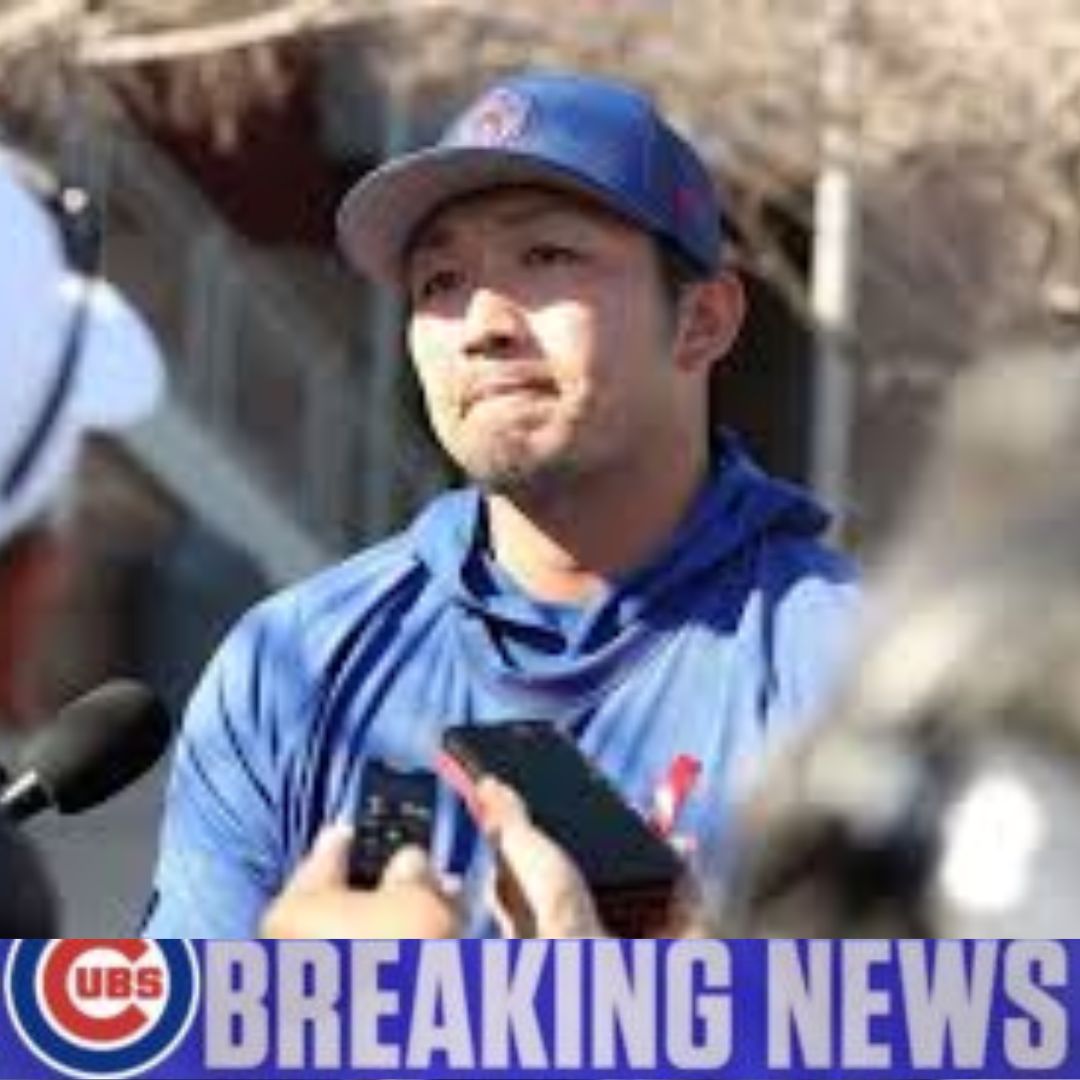
The Chicago Cubs received a crucial update on Seiya Suzuki, and while the news avoided worst-case fears, it still leaves the team facing a delicate decision just days before Opening Day.
An MRI has confirmed that Suzuki suffered a strained PCL (posterior cruciate ligament) in his right knee, the result of an awkward headfirst slide while attempting to steal second base during Japan's loss to Venezuela in the World Baseball Classic.
From a medical standpoint, this diagnosis is being viewed as a positive outcome, especially compared to more severe ligament injuries that could have ended his early-season availability entirely.
Cubs manager Craig Counsell described the injury as "minor in nature", reinforcing that the team avoided a major setback with one of its most important hitters.
However, "good news" does not mean no problem.
Suzuki is still dealing with swelling and mobility limitations, and the Cubs are now in a wait-and-see phase as they evaluate how his knee responds over the coming days.
The organization has not yet decided whether to place him on the injured list, with a final call expected before Opening Day on March 26.
That uncertainty is significant because Suzuki is not just a regular starter — he is a core offensive piece.
Coming off a 2025 season in which he delivered 32 home runs and 103 RBIs, Suzuki is one of the primary power threats in the Cubs lineup and a key reason the team returned to the playoffs.
Even in limited action during the WBC, he showed strong form, hitting two home runs and driving in five runs in just four games, suggesting he was entering the season in rhythm before the injury occurred.
From a roster perspective, the Cubs are now balancing two competing priorities:
-
Short-term competitiveness → having Suzuki available for Opening Day
-
Long-term health → avoiding aggravation of a knee injury early in the season
The fact that Suzuki is still able to participate in light baseball activities is encouraging, as it indicates the injury is not structurally severe.
But the key issue is functionality, not just diagnosis.
A PCL strain directly impacts stability, acceleration, and lateral movement, all critical for an outfielder expected to both hit and defend at a high level.
Even if Suzuki can swing effectively, limitations in running and fielding could make early-season participation risky.
If he does miss time, the Cubs are relatively well-positioned to absorb the absence, at least temporarily.
Options such as Matt Shaw and Michael Conforto could step into right field duties alongside Ian Happ and Pete Crow-Armstrong, giving the team short-term coverage.
Still, replacing Suzuki's combination of power, plate discipline, and lineup presence is not something that can be replicated easily.
There is also a broader layer to this situation that cannot be ignored.
Suzuki is entering the final year of his contract, making 2026 a pivotal season not only for the Cubs, but also for his future value in free agency.
Missing time early in the season could impact both his rhythm and his market trajectory, adding another layer of importance to how carefully the team manages his recovery.
For now, the Cubs are taking a cautious approach, gathering information and resisting the urge to rush a decision.
The next few days will be critical.
If Suzuki responds well to treatment and regains mobility, he could avoid the injured list and return quickly.

If not, Chicago may opt for a short IL stint to ensure he returns at full strength rather than risking a lingering issue.
Either way, the situation has shifted from a minor scare to a meaningful early-season storyline, one that could influence how the Cubs start their 2026 campaign.
The diagnosis may be "good news," but the decision ahead is anything but simple.